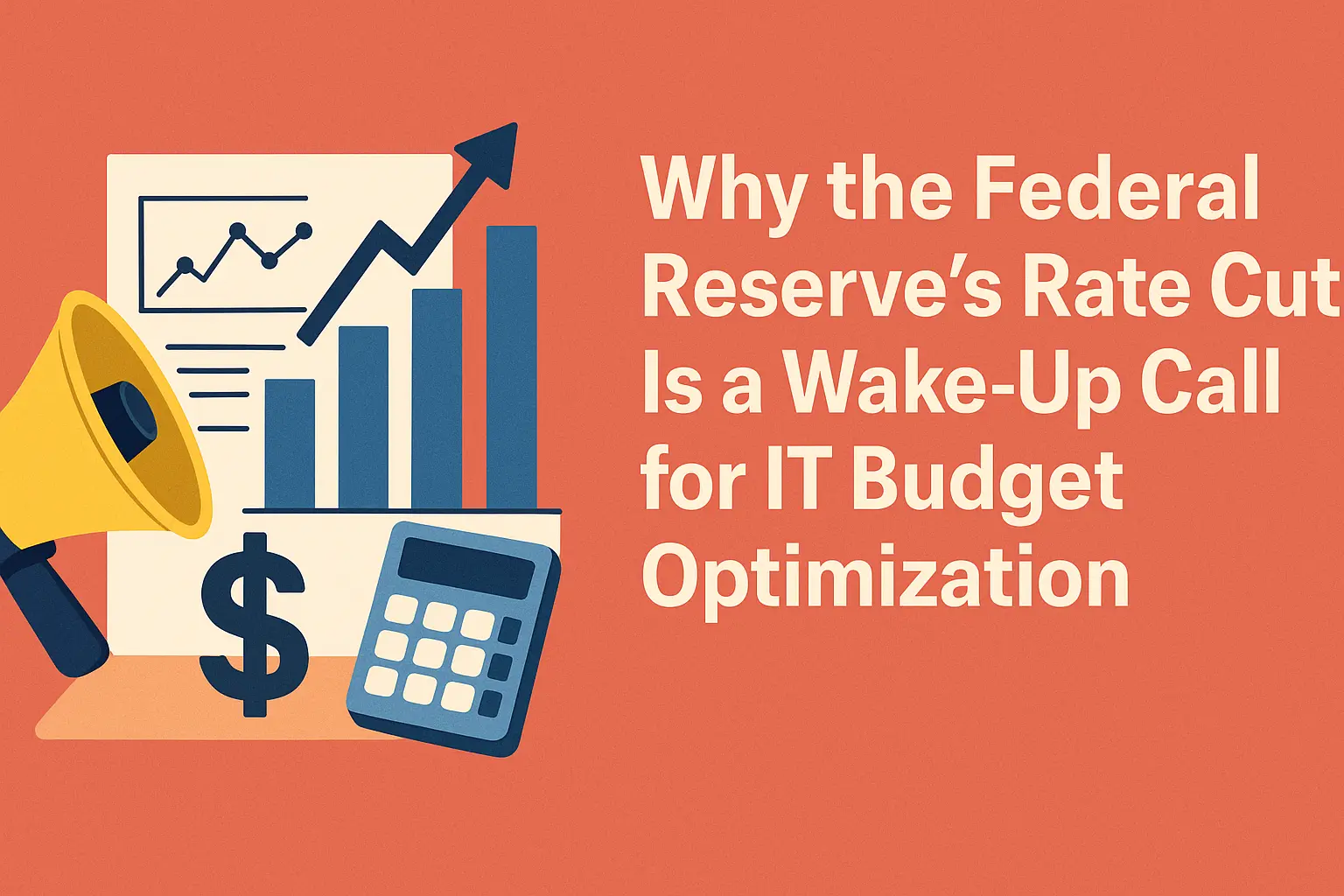
IT leaders, take note: The recent Federal Reserve rate cut isn’t just a macroeconomic signal – it’s a strategic inflection point for how enterprises manage their IT budgets.
In a tightening economy, every dollar counts. And nowhere is that more visible than in IT operations, where ballooning costs across endpoint support, tool sprawl, and compliance overhead are under scrutiny. If you’re still relying on traditional ticket-based ITSM or fragmented patching and automation stacks, you’re likely burning through unnecessary budget.
What’s Changing?
- Lower interest rates often precede budget tightening cycles, especially in tech-heavy sectors.
- IT teams will be pushed to do more with less – automate, consolidate, optimize.
- CFOs are questioning every recurring license, every support contract, every tool that doesn’t integrate.
What Smart IT Teams Are Doing
Forward-thinking IT leaders are responding with automation-first strategies. Platforms like Anakage enable:
- Self-healing endpoints that reduce L1 ticket volumes by up to 70%
- Low-code bot creation, removing dependency on scripting teams
- Integrated compliance enforcement, without relying on PowerShell or point tools
- Real-time DEX analytics to justify productivity gains
Takeaway for CIOs and IT Managers
- Stop treating IT support as a cost center, make it self-optimizing.
- Replace 4-5 tools with one unified, agent-based automation platform.
- Reduce cost per endpoint while increasing digital agility.
What IT Leaders Need to Know (FAQ)
Q: How does automation impact IT cost savings directly?
A: Automated remediation reduces support headcount needs and ticket volumes, while self-service shrinks resolution times, saving both labor and productivity costs.
Q: Can this work without PowerShell or cloud agents?
A: Yes. Anakage runs on-premise, is LLM-ready, and supports regulated industries (e.g. BFSI, healthcare) with no external data exposure.
Liked this post?
Want to see Anakage live in action? Schedule a 15-minute demo today!