A year ago we moved our entire engineering and product process onto Anakage ITSM. Bugs, feature requests, customer issues, release planning — all of it, in the tool we sell. It exposed more gaps in three weeks than a year of customer feedback had. It also made the product measurably better.
This is not a marketing story. Parts of it were uncomfortable.
The Mess We Started With
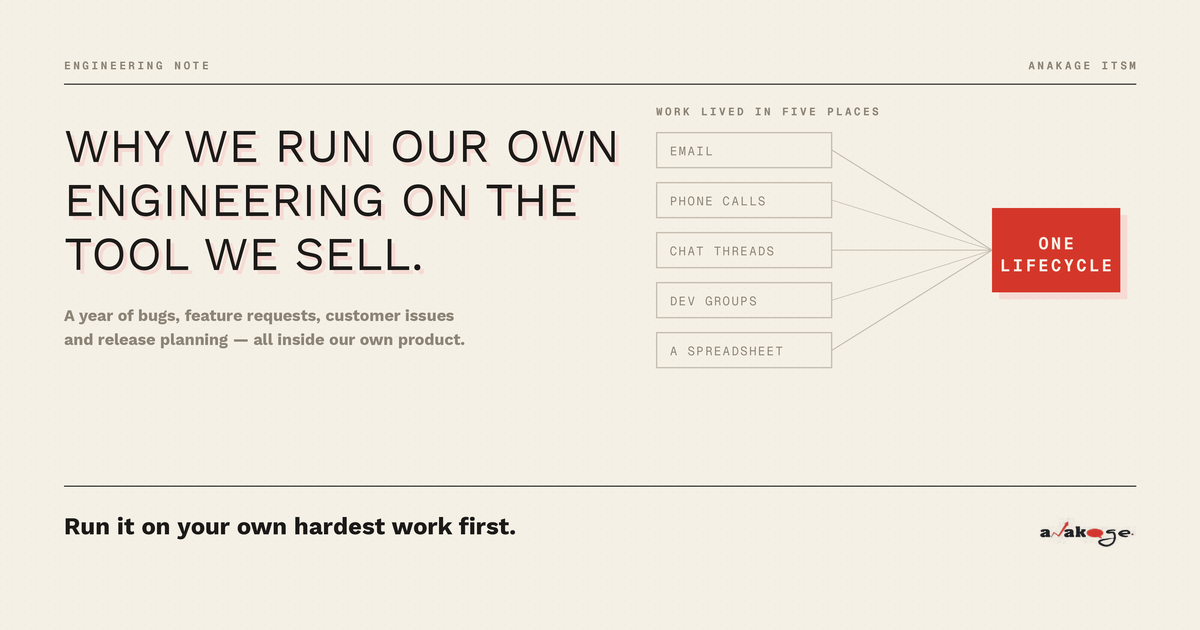
Our work lived in five places at once.
Customer issues arrived by email and phone. Internal feature requests came through chat and hallway conversations. Bugs were argued about in developer groups. Release planning sat in a spreadsheet that one person owned.
Nothing was broken. Nothing was connected either.
Every week the same five questions came up:
- Is this customer issue already assigned to someone?
- Who owns this feature right now?
- Is this bug blocking the next release?
- Which team is overloaded this sprint?
- How many issues missed their target resolution time?
Answering them took longer than fixing the actual problem. That is the part that finally pushed us.
What We Actually Wanted
We were not looking to swap one ticketing tool for another.
We wanted engineering, product, QA and support working in one place. Every piece of work should follow the same lifecycle. It should not matter whether it started as a customer complaint or a product idea.
The shortlist was short:
- One source of truth
- A named owner on every task
- Progress tracked without anyone asking for updates
- Measurable service levels
- Reports that need no manual preparation
We were already building that. So we used it.
The First Three Weeks Were Rough
Using your own software sounds easy. It is not.
Developers found things in days that customers had never bothered to report. Support engineers wanted faster ticket search. Product managers wanted dashboards that answered morning questions, not quarterly ones. Everyone wanted fewer clicks.
Some workflows looked correct on paper. They did not survive contact with real engineering work.
We had a choice at that point. Treat the complaints as noise, or treat them as requirements. We logged every one as a ticket.
Every Complaint Became a Development Task
This is the part that changed our speed.
When something slows us down now, nobody writes a wishlist. Someone raises a ticket. It gets prioritised, assigned, built, tested and released inside the same system.
Dogfooding — using your own product in daily production work, exactly the way a customer would.
A good number of features in Anakage ITSM exist because our own team hit the wall first. Better ticket visibility. Faster filtering. Clearer status transitions. SLA monitoring. Group-wise performance tracking. Agent scorecards.
None of those came from a roadmap workshop. They came from someone getting annoyed on a Tuesday.
Visibility Changed More Than Automation Did
We expected automation to be the win. It was not.
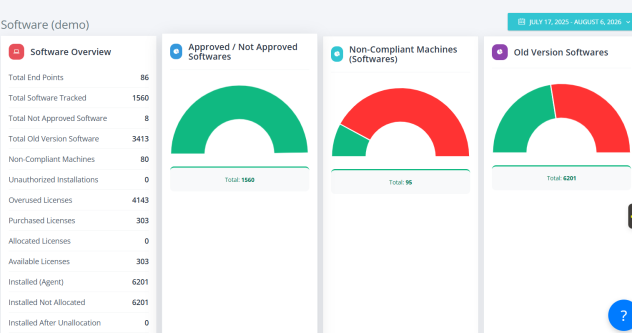
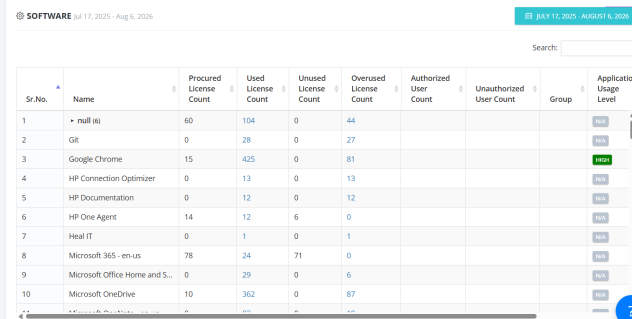
The real change was visibility. We stopped asking people for status. We started looking at a dashboard.
In about ten seconds, anyone can see:
- Total open workload
- Tickets assigned per engineer
- SLA compliance for the week
- Resolution trend against last month
- Which queue is quietly growing
Our daily stand-up dropped from around 25 minutes to under 10. Planning meetings got sharper because nobody spends the first half reconstructing reality.
Managers now spend that time removing blockers instead of collecting information.
Accountability Without Anyone Being Chased
Nobody enjoys being asked “what’s the status?” three times a day.
Now everyone sees the same screen. Each ticket has one owner. Each group has a measurable number. Each release has full traceability back to the original request.
That creates accountability without a manager standing over anyone. Developers spend more time solving problems and less time reporting on them.
There is a real caution here. Dashboards can turn into surveillance if you let them. We review team-level trends, not individual ticket counts, in performance conversations. That distinction matters more than the tooling.
What We Would Do Differently
Two things.
We should have moved one team first instead of everyone at once. The first fortnight was noisier than it needed to be.
And we underestimated the reporting cleanup. Old spreadsheets kept getting updated in parallel for weeks. Killing the spreadsheet properly is a decision, not a migration step.
Is This Worth Copying?
If you build software and sell it, probably yes.
If your team is under about ten people, the overhead may not pay off yet. Chat and a shared board might genuinely be enough. We are honest about that with prospects too — Anakage ITSM fits teams that have outgrown informal tracking, not teams that have not reached it.
The broader lesson applies to any tool you buy. Run it on your own hardest workflow before you roll it out widely. You will find in two weeks what a vendor demo will never show you.
FAQ
Q: What does dogfooding mean in software development? A: Dogfooding means using your own product in real daily work, not just in testing. The team experiences the same friction customers do. It usually surfaces usability problems long before support tickets would.
Q: Can an ITSM platform replace a dedicated bug tracker? A: For many product teams, yes. The advantage is that customer issues and internal bugs live in one lifecycle. Teams doing heavy code-linked branching workflows may still prefer a developer-native tracker alongside it.
Q: How do you track SLAs on internal engineering work? A: Set target resolution times by ticket priority, then measure breaches weekly. Track it at group level rather than per person. The number is useful for capacity planning, not for ranking engineers.
Q: What should an engineering dashboard actually show? A: Open workload, ownership, SLA compliance, resolution trend and ageing tickets. Five things is enough. Dashboards that show twenty metrics get ignored within a month.
Q: Does using your own product really improve it faster? A: In our experience, clearly yes. Small usability fixes that would have waited two quarters got shipped in days. The reason is simple — the person feeling the pain can raise the ticket directly.
Q: Is ITSM only for IT support teams? A: No. The same lifecycle works for engineering, HR onboarding, facilities and finance requests. The core need is identical: intake, ownership, status and measurable resolution time.
Q: How long did the switch take? A: Core setup took under two weeks. Getting everyone to actually abandon the old spreadsheets took closer to six. The second number is the one people underestimate.
We did not expect running our own tool to change how we build it. It did. Every improvement now starts with a real problem our own team hit, which is a better source of requirements than any planning session.
If your engineering and support work is scattered across five tools, the Anakage team runs a 30 minute walkthrough of how we use it internally — no pitch deck. Book it at anakage.com/book-a-demo.